


You come home to a gnawed chair leg, a shredded couch cushion, or baseboards that look like a beaver visited. Furniture chewing is one of the most expensive dog habits out there, and it is also one of the most fixable. The key is figuring out why your dog is chewing before you pick a fix.
This guide covers the four most common reasons dogs chew furniture, a management plan that protects your home while you train, and a simple way to track whether it is actually working.
First, Figure Out Why Your Dog Chews Furniture
Quick version: teething, boredom, anxiety, and hunger all look the same on a chewed table leg, but they need different fixes.
Chewing is normal canine behavior. Dogs use their mouths to explore, relieve stress, and pass the time. The problem is only what they choose to chew. The ASPCA and AKC both point to a handful of repeat causes.
| Likely cause | Typical clues | Where to focus |
|---|---|---|
| Teething (puppies) | Under about 6 months, chews anything cold or hard | Frozen chews, supervision, puppy-proofing |
| Boredom or under-exercise | Chewing happens during quiet afternoons or evenings, young or high-energy breed | Exercise, food puzzles, toy rotation |
| Separation distress | Damage only when you’re gone, often near doors or windows, plus whining or pacing | Anxiety plan, possibly a vet or behavior pro |
| Hunger | Dog is on a calorie-restricted diet, targets food-scented items | Talk to your vet about feeding, use food puzzles |
According to the ASPCA, the intense puppy teething phase usually ends by about six months of age. Many owners are surprised when chewing comes back during adolescence anyway. Often, the cause is energy and curiosity rather than sore gums.
Location is a big clue. AKC trainer Stephanie Gibeault notes that destructive chewing focused around doors and windows can point to separation anxiety. If that matches what you’re seeing, our guide to separation anxiety signs and fixes is a better starting point than a chew toy.
I didn’t expect the hunger angle when I started digging into this one, but the ASPCA lists it plainly: dogs on reduced-calorie diets may chew in search of more food.
Protect the House While You Train
Quick version: every successful chew on the couch is practice for the habit, so limit access first.
Training works much faster when your dog isn’t getting daily rehearsals of the old behavior. Management is not a failure; it’s how you keep the slate clean while new habits form.
- Close doors and use baby gates to keep your dog in rooms that have already been dog-proofed. Our puppy-proofing checklist works for adult dogs too.
- Use a crate or pen for unsupervised time if your dog is comfortable in one. The ASPCA recommends keeping crate time to a maximum of about six hours.
- Apply a taste deterrent to chair legs and baseboards. The ASPCA suggests reapplying every day for two to four weeks, and AKC guidance is similar. Test a small hidden spot first so you don’t damage the finish.
- Pick up tempting items like shoes, remote controls, and throw pillows. Anything left on the floor is fair game in your dog’s eyes.
Taste deterrents are a supporting tool, not a solution. Some dogs don’t mind the flavor at all, and the spray does nothing about the reason your dog wanted to chew in the first place.
Give Your Dog Better Things to Chew
Quick version: you are not stopping chewing; you are redirecting it to approved items.
Dogs need a legal outlet. The more satisfying that outlet is, the less interesting your furniture becomes.
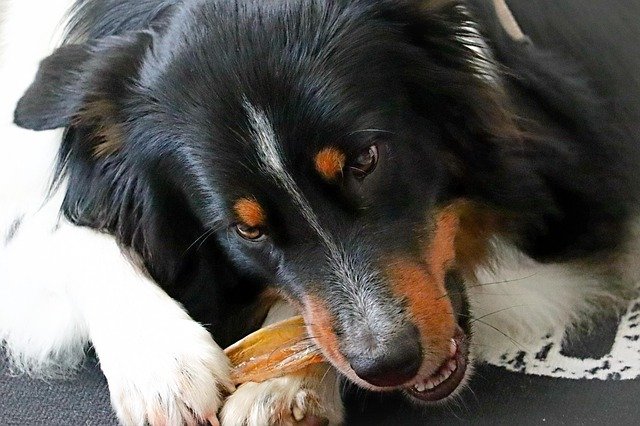
A good chew toy should be more rewarding than the coffee table.
- Offer a variety of textures. Rubber toys, nylon chews, and edible chews each appeal to different dogs. Watch which ones your dog actually works on.
- Stuff food toys. The AKC suggests treat-dispensing toys filled with things like peanut butter (xylitol-free) or small treats. Freezing them makes them last longer.
- Rotate toys every few days. A toy that has been on the floor for two weeks is furniture to your dog. Swapping keeps things novel.
- Feed some meals from puzzles. The ASPCA recommends using food puzzles for part of the daily ration, which turns mealtime into a job.
Size matters for safety. Choose chews too big to swallow, and take away anything that breaks into sharp pieces. If you aren’t sure what’s safe for a heavy chewer, ask your vet.
Redirect in the Moment (Without Punishment)
Quick version: interrupt calmly, swap for a toy, and praise the swap.
When you catch your dog mouthing the couch, make a neutral interrupt sound, then hand over an approved chew and praise when they take it. If your dog already knows “drop it,” this is a perfect time to use it. Our leave it and drop it guide walks through teaching both cues.
What you should skip, according to the ASPCA:
- Punishing after the fact. Your dog can’t connect a scolding to chewing that happened an hour ago.
- Harsh or physical corrections. These raise stress, and stress is a common driver of chewing to begin with.
- Muzzling as a prevention method while you’re away. A muzzle is not a substitute for supervision or confinement.
Timing is what makes redirection work. I’ve found it helps to think of it as a trade your dog is happy to make, not a correction.
Burn Off Energy Before Chewing Hours
Quick version: a tired, mentally worked dog chews less.
Most furniture damage happens during predictable windows: the late afternoon slump, right after you leave, or the hour before bed. Plan activity just before those windows.
- A brisk walk or play session 20 to 30 minutes before you leave.
- A short training session (five minutes of sit, down, and place counts).
- A sniff walk, where your dog chooses the route and gets to explore with their nose.
- A frozen food toy handed over as you walk out the door.
Track It: A Simple Chewing Log
Chewing problems often improve slowly, and it’s easy to lose sight of progress. Fill in this template once a day for three or four weeks. Look for patterns in the time of day and what was happening right before.
| Date | Chewing incidents | Time of day | What was chewed | Exercise that day (minutes) | Alone time (hours) |
|---|---|---|---|---|---|
If incidents cluster on low-exercise days, you have your answer. If they cluster only on alone time regardless of exercise, anxiety moves higher on the list.
Questions Owners Ask
At what age do dogs stop chewing furniture?
Puppy teething usually winds down around six months, according to the ASPCA, but chewing itself never fully stops. Adult dogs keep chewing for enjoyment and stress relief. The goal is to make approved chews the default.
Do bitter sprays actually work?
They help some dogs, especially when used consistently for a few weeks. They work best alongside management and better chew options, not as the only fix.
Why does my dog only chew when I leave?
That pattern can point to separation distress, especially with whining, pacing, or accidents. Start with our separation anxiety guide and consider talking with your vet or a certified behavior consultant.
Should I get a second dog to keep mine busy?
Usually not as a chewing fix. A second dog can double the problem if the first dog’s needs aren’t met. Solve the current issue first.
The Short Version
Stop furniture chewing by finding the cause, blocking access while you train, and giving your dog chews that are more rewarding than your couch. Add exercise before high-risk times and keep a simple log so you can see what’s working.
If chewing started suddenly in an adult dog, a vet check is worth it, since pain or dental issues can play a role. For puppies, pair this plan with our guide to stopping puppy biting.