


You sit down to work, answer a call, or start dinner, and the whining begins. Then comes the pawing, the nose nudge, the stare. Attention-seeking whining is one of those habits that owners build without meaning to, usually by responding to it just often enough.
The fix is simple on paper and harder in practice: stop paying for whining and start paying for quiet. Here’s how to do that without yelling, and what to expect when the whining briefly gets worse before it gets better.
First, Make Sure It’s Actually Attention
Not all whining is a request for attention, and treating the wrong kind can backfire.
The ASPCA lists several reasons dogs whine. Only one of them should be handled by ignoring it.
| Type of whining | What it looks like | What to do |
|---|---|---|
| Attention-seeking | Directed at you, stops when you engage, often paired with pawing or staring | The plan in this article |
| Need-based | Near the door, water bowl, or at usual potty time | Meet the need, then build a routine |
| Appeasement | Lowered body, tucked tail, averted eyes | Stay calm and non-threatening |
| Anxiety or stress | Pacing, panting, whining when alone | Address the anxiety; see our separation anxiety guide |
| Pain | New whining, especially when moving or being touched | Vet visit |
If the whining is new, sudden, or comes with limping, reluctance to jump, or changes in appetite, see your vet before starting any training plan.
Why Attention Whining Sticks
Your dog has learned that whining works, at least some of the time.
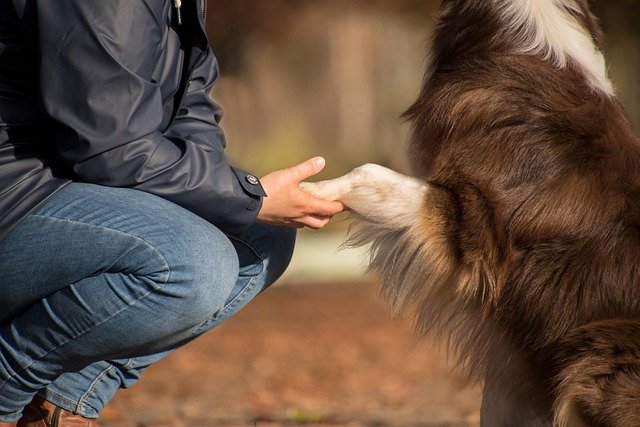
Pawing and whining often travel together, since both have earned a response before.
Veterinary behaviorist Dr. Sagi Denenberg, quoted by the AKC, explains that dogs try out different behaviors on their owners and repeat whichever ones work. Whining is a strong candidate because even a small response counts.
The ASPCA is specific here: eye contact, touching, or talking to your dog while they whine all count as attention. So does scolding. “Quiet!” shouted from across the room is still a reply.
I found that last point the most useful reframe while pulling this together. Most of us think we’re ignoring whining when we’re actually answering it with a sigh and a glance.
The Plan: Stop Paying for Noise, Start Paying for Quiet
Four pieces that work best together.
1. Withhold attention during whining
The ASPCA recommends clear body language: turn away, fold your arms, and give no eye contact until your dog is quiet. If your dog is new to this, the AKC notes Dr. Denenberg suggests starting with short periods of about 30 seconds rather than trying to ignore your dog for long stretches.
2. Reward quiet, calm behavior
The moment your dog is quiet, even for a couple of seconds, turn back and give attention, a treat, or play. The ASPCA puts it plainly: your dog should learn that being quiet comes before attention, play, or treats.
3. Give attention before it’s demanded
This part gets skipped. The ASPCA recommends regularly seeking out your dog for attention and rewards while they’re not whining. A dog whose need for contact is met proactively has less reason to demand it.
4. Teach a replacement behavior
Give your dog something to do instead. Sitting politely, lying on a mat, or bringing a toy all work. A settle on a mat is especially handy during calls and meals; our place command guide walks through it.
Expect an Extinction Burst
If whining suddenly gets louder, the plan is working.
The AKC warns that attention-seeking behaviors often get worse before they get better. When a strategy that used to work stops working, dogs try harder: louder whining, more pawing, maybe a bark. This is called an extinction burst.
This is the point where many owners give in. If you respond now, your dog learns that louder whining works, which makes the habit stronger. Stay consistent for a few more days and the burst typically fades.
Reduce the Triggers
A dog with nothing to do will make you their project.
- Meet exercise needs with a walk or play session before your busiest part of the day.
- Hand over a food puzzle right before a phone call or video meeting. The AKC suggests puzzle toys for exactly these moments.
- Build in rest. Overtired dogs, especially puppies and adolescents, often get whinier. A consistent nap routine in a crate or pen helps; see our crate training guide.
- Keep everyone consistent. If one family member responds to whining, the whole plan stalls.
A Sample First Week
Structure makes consistency easier for everyone in the house.
| Time | What you do | Why it helps |
|---|---|---|
| Morning | Walk or play before you sit down to work | Lowers restless energy |
| Start of work or first call | Hand over a stuffed food toy on a mat | Gives your dog a job during a high-whine window |
| Every 30 to 60 minutes | Walk over and calmly praise or pet your dog while they’re quiet | Proactive attention for silence |
| Midday | Potty break and short sniff walk | Rules out need-based whining |
| Afternoon | Crate or pen nap | Tired dogs whine more |
| Evening | Five-minute training session (sit, down, mat) | Builds the replacement behaviors |
Agree on the rules as a household before day one. The ignore-then-reward pattern only works if nobody breaks it, including the family member who “just gave one pat.”
Track Your Progress
Whining is easy to misjudge day to day. Record one high-risk time (like your first work call) for two weeks.
| Day | Whining episodes | Longest episode (seconds) | Quiet moments rewarded | Exercise before (Y/N) |
|---|---|---|---|---|
| 1 | ||||
| 2 | ||||
| 3 | ||||
| … | ||||
| 14 |
Expect the “longest episode” number to spike during the extinction burst, then fall. That pattern is a good sign, not a failure.
What Not to Do
- Don’t scold. Negative attention is still attention, and the AKC notes punishment can harm your relationship.
- Don’t give in halfway through. Responding after a long bout of whining teaches persistence.
- Don’t say “quiet” as a magic word unless you’ve actually trained it. The ASPCA warns that an untrained cue is just more talking.
Owner Questions
How long does it take to stop attention whining?
It depends on how long the habit has been rewarded and how consistent the household is. Some dogs improve within a couple of weeks once whining stops working, while long-standing habits can take longer. Expect a short extinction burst along the way.
Should I ignore a puppy whining in the crate?
Not automatically. Young puppies may need a potty break. Take them out calmly with no play, then return them to the crate. Ignore whining only once needs are met.
What if my dog whines at night?
Rule out potty needs, discomfort, and anxiety first. Our guide to night barking covers overlapping causes.
Summing It Up
Attention whining fades when it stops earning a response and quiet starts earning one. Rule out pain and real needs, ignore whining briefly and consistently, reward calm the moment it happens, and give your dog attention before they ask. Brace for the extinction burst and don’t give in.
Honestly, the proactive attention step seems like the easiest win of the bunch, and it’s the one I’d start with tomorrow morning. It pairs well with our guide to stopping jumping on people, another habit that runs on attention.