

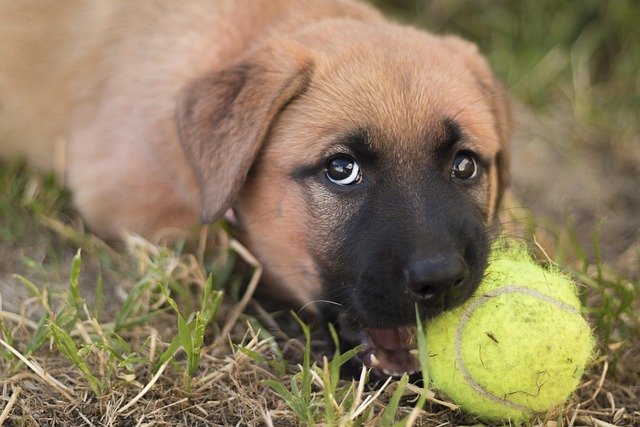
Those needle-sharp puppy teeth can turn a cuddle into an “ouch” in a second. The good news: puppy biting is completely normal — it’s how puppies explore the world and play — and with the right approach, most puppies learn to be gentle within a few months. The key is teaching bite inhibition (a soft mouth) and redirecting those teeth onto the right things. Here’s exactly how to stop a puppy from biting, step by step.
Why puppies bite
Understanding the cause makes the fix easier. Puppies bite because they explore with their mouths, because they’re teething (sore gums from around 3 to 6 months), and because mouthing is how they play with littermates. It usually isn’t aggression — it’s play and curiosity. But left unchecked, a puppy who never learns to control their bite grows into an adult dog who plays too rough, so it’s worth teaching now.
How to stop puppy biting, step by step
1. Redirect to a chew toy
The moment your puppy goes for your hand, swap in a chew toy. Keep toys within reach in every room so you always have something to offer. This teaches your puppy what is okay to bite instead of just what isn’t.
2. Teach bite inhibition with a yelp
When your puppy bites too hard, let out a high-pitched “ouch!” and immediately stop playing — pull your hand away and go still or briefly leave. This mimics how a littermate would react and teaches your puppy that hard bites end the fun. Resume play after a few seconds. Over time your puppy learns to use a softer and softer mouth.
3. Use time-outs for persistent biting
If the yelp doesn’t work and your puppy keeps coming back harder, calmly end the session — step over a gate or leave the room for 10 to 20 seconds. The lesson: teeth on skin make the human (and the fun) disappear.
4. Give plenty of chew outlets and teething relief
A teething puppy needs to chew. Provide a variety of safe chew toys, and try a frozen wet washcloth or a chill-able teething toy to soothe sore gums. A puppy with good outlets bites you less.
5. Meet their exercise and nap needs
An overtired or under-stimulated puppy bites more — the “witching hour” nipping is often a sign your puppy needs a nap or more mental stimulation, not more play. Balance physical exercise, short training games, and enforced rest.
6. Reward gentle behavior
Catch your puppy being calm and gentle and reward it with praise or a treat. Reinforcing the behavior you want is just as important as discouraging the biting.

What not to do
Never hit, muzzle-grab, or physically punish your puppy for biting. According to the ASPCA and AKC, physical corrections increase fear and can actually make biting worse or turn play-biting into defensive aggression. Avoid fast, jerky hand movements that look like a game, and don’t let anyone (especially kids) wrestle with their hands or encourage rough mouthing.
How long does it take?
Most puppies bite much less once teething ends around 6 to 7 months, and with consistent training many are reliably gentle well before then. If your puppy is over 6 months and still biting hard, or if the biting seems fearful or aggressive rather than playful, consult a professional trainer or your vet.
Frequently Asked Questions
Is puppy biting normal?
Yes — it’s a normal part of play, exploration, and teething. What matters is teaching your puppy to be gentle and to redirect onto toys, not expecting them to never mouth at all.
At what age do puppies stop biting?
Biting typically eases as teething finishes around 6 to 7 months, and consistent training speeds it up. Persistent hard biting past that age is worth a trainer’s help.
How do I tell play biting from aggression?
Play biting comes with a loose, wiggly body and is usually soft and intermittent. Stiff posture, growling with a hard stare, snapping, or fearful body language is different — if you see those signs, consult a professional.
Does saying “ouch” really work?
For many puppies, yes — a sharp yelp plus ending play teaches bite inhibition. If your individual puppy gets more excited by it, skip the sound and go straight to a calm time-out.
In Short
Stopping puppy biting comes down to redirecting those teeth onto toys, teaching bite inhibition with a yelp and time-outs, meeting your puppy’s chew and rest needs, and never punishing physically. Stay consistent and patient — this is one of the fastest puppy problems to improve. For a calm, safe home base while you train, see our guide to crate training step by step.
References
- American Kennel Club — How to Stop Puppy Biting and Train Bite Inhibition (2026)
- ASPCA — Mouthing, Nipping and Play Biting