

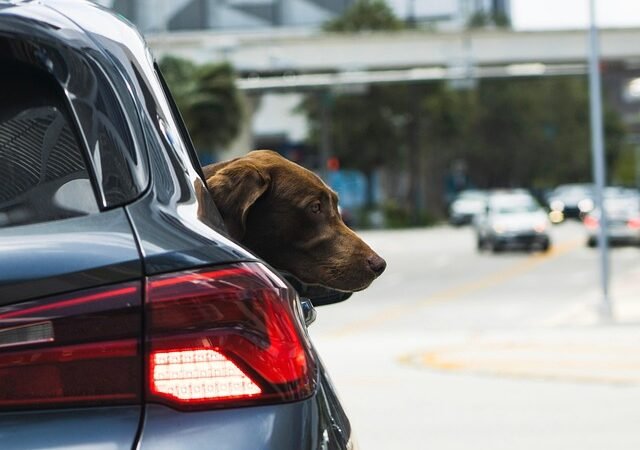
If you’re trying to crate train a dog for car travel, the process is different from teaching a dog to nap in a crate at home. A moving vehicle adds engine noise, swaying motion, and unfamiliar g-forces that can turn a dog who is perfectly relaxed in a stationary crate into one who whines, drools, or panics the moment the car pulls out of the driveway.
That gap between a calm crate dog at home and a stressed one in the car is exactly what got us curious enough to dig into the restraint-usage numbers below. According to a AAA/Kurgo pet safety survey, only 17% of dog owners use any kind of restraint for their dog in the car, even though a properly secured crate is one of the few ways to protect a dog if you have to brake hard or are involved in a collision.
This guide focuses specifically on building a positive, low-stress association between your dog’s crate and the car itself, not general at-home crate training.
Why Car-Specific Crate Training Is a Separate Skill
A dog who is fully crate trained at home can still be a wreck in a moving car, so the two skills need to be taught separately. A crate at home is predictable: it sits in the same spot, doesn’t vibrate, and doesn’t compete with new smells and sounds.
A crate in a car is a different environment layered on top of an already-learned behavior. The dog has to generalize “the crate is a safe place” to a context that includes engine vibration, turns, stops, and often the anxiety of not being able to see much out the window.
Many owners skip this step entirely and only discover their dog has a problem on the morning of a long road trip. Treating car crate training as its own short program, separate from, and after, basic crate training, sets up far better odds of a calm traveler.
Step 1: Introduce the Crate in a Parked Car First
Before the engine ever starts, let your dog get comfortable with the crate while the car isn’t moving. The American Kennel Club recommends starting by letting your dog investigate the crate or seat belt equipment itself, offering treats and praise for simply approaching and sniffing it.
Once your dog is used to the equipment, load the secured crate into the car exactly where it will ride on real trips, then spend a few minutes sitting nearby with the door open, tossing in treats or feeding a meal inside. When your dog can settle in the crate with the car off, close the crate door for a few short sessions, then progress to sitting in the car together with the engine running but the car still in park.
Only move to actual driving once your dog is relaxed through that stage; rushing this step is the single biggest reason car-specific crate training fails.
Step 2: Start With Short, Boring Drives
The first real drives should be short, uneventful, and end somewhere pleasant, not saved for the day of a long trip. AKC trainers advise starting with brief drives around the block or neighborhood rather than jumping straight into a planned road trip; this removes time pressure and lets you focus entirely on your dog’s reactions.
Reinforce calm, quiet behavior in the crate with small, easy-to-digest treats, and keep the destination low-key at first: a quick loop that ends back at home, then gradually a drive to a nearby park or a friend’s house. As your dog stays settled, extend the drive length in small increments, five minutes, then fifteen, then thirty, before attempting anything close to the length of your actual road trip.
Skipping straight to a two-hour drive because “the crate training went fine at home” is exactly the mistake this staged approach is designed to prevent.

Recognizing and Managing Motion Sickness in the Car
Motion sickness looks different from anxiety, and both need different responses. AKC identifies whining, drooling, lip licking, and vomiting as common signs of carsickness, and notes it can stem from a physical cause, an underdeveloped inner-ear balance system, most common in puppies, or a psychological one, such as associating the car with something unpleasant like a past vet visit.
VCA Animal Hospitals confirms that motion sickness is more common in younger dogs because the balance-related structures in the inner ear aren’t fully developed yet, and many puppies grow out of it by around a year of age. In the meantime, a few adjustments can help: withhold food for several hours before a trip rather than driving right after a meal, position the crate so your dog faces forward with a view of the middle of the vehicle rather than sideways out a window, crack a window slightly to help equalize air pressure, and keep early trips short enough that your dog never has time to get sick in the first place.
If vomiting, excessive drooling, or clear distress continues despite a slow, careful introduction, that’s a sign to loop in your veterinarian rather than pushing through more trips on your own. The most common mistake we see in car-crate-training advice is treating the parked-car and short-drive stages as optional “if you have time” steps: AKC, ASPCA, and VCA all consistently frame gradual exposure as the actual mechanism that prevents both motion sickness and travel anxiety, and skipping straight to a real road trip looks like the single biggest predictor of a bad first experience.
Crash Safety Basics: A Secured Crate Beats a Loose Dog
The point of crate training for car travel isn’t just calm behavior; it’s also physical safety if something goes wrong on the road. The ASPCA states plainly that “a crate is the safest option for your pet in case of an accident,” and specifies that the crate needs to be large enough for your dog to stand, sit, turn around, and lie down comfortably, and must be secured so it can’t slide or tip during a sudden stop.
That second part matters as much as the crate itself: an unsecured crate can become a projectile just like an unrestrained dog. The AAA/Kurgo Pet Traffic Safety Survey illustrates why restraint matters in blunt physical terms: in a crash at 50 mph, a 10-pound dog can exert roughly 500 pounds of force, and an 80-pound dog in a 30 mph crash can generate around 2,400 pounds of force.
The same survey found dog owners most often restrain their pets with harnesses attached to a seatbelt (52%), hard-sided crates (28%), or vehicle pet seats (18%). Whichever option you choose, the training in this article works the same way: build the positive association first, in a parked car, before the crate ever has to do its job on the road.
Putting It Together: A Simple Progression for Your Road Trip
Stack the steps above into a timeline so you’re not improvising the week before a big trip. A reasonable pace for most dogs looks like: a few days of crate-in-parked-car sessions, then several short “around the block” drives over about a week, then one or two 20-to-30-minute trips to a fun destination, and finally a longer practice drive that approaches the length of a leg of your actual road trip.
Dogs who show ongoing signs of stress or sickness at any stage should stay at that stage longer rather than moving forward on a fixed schedule; there’s no prize for finishing car crate training in a set number of days, and dogs progress at very different rates depending on age, past experiences, and temperament.
Track Your Own Dog’s Progress
Every dog reacts differently to car travel, so a generic checklist only goes so far. Use the blank log below to record your own dog’s trips as you work through the training progression: filling it in yourself will help you spot patterns (like whether shorter trips or a particular seating position works better) well before a long road trip.
| Trip Date | Trip Length | Dog’s Behavior in Crate (calm / whining / vomiting / drooling) | Treats/Enrichment Used | Notes for Next Trip |
|---|---|---|---|---|
Quick FAQ
How long does it take to crate train a dog for car rides?
It varies widely by dog. Some adjust within a week of short daily sessions, while dogs with a strong negative association with the car, or an underlying motion sickness issue, may need several weeks of gradual exposure. Following the parked-car-first, short-drives-second progression matters more than hitting a specific timeline.
Should the crate go in the back seat or the cargo area?
Either can work as long as the crate is properly secured against sliding and tipping, sized appropriately for your dog, and, per ASPCA guidance, positioned so your dog isn’t in direct sun or blasted by an air vent. Cargo areas in SUVs and hatchbacks are popular because they keep the crate out of the main cabin, but a secured crate on the back seat is also a common and effective setup.
My puppy gets carsick every time, will this get better?
Often, yes. VCA Animal Hospitals notes that motion sickness in dogs is linked to inner-ear balance structures that aren’t fully developed in puppies, and many outgrow it by around a year old. Keep trips short and positive in the meantime, and talk to your vet if sickness continues or seems to be getting worse rather than better.
Final Thoughts
Crate training for car travel is really just regular crate training with one extra variable, motion, introduced slowly and deliberately, and once you frame it that way, most of the trial and error we hear about from readers tends to sort itself out.
If you haven’t worked through the basics of crate training yet, it’s worth reading our step-by-step guide to crate training a dog before layering in car-specific practice, since a dog who isn’t yet comfortable in a stationary crate will struggle even more in a moving one.
And if you’re planning road trips around a recent addition to the household, our article on introducing a new puppy to your resident dog covers a related but separate set of challenges worth thinking through before you hit the road together. With a patient, staged approach, parked car, then short drives, then longer trips, most dogs can learn to see the crate as a safe, familiar space no matter where the car is headed.
Dogs with a history of severe motion sickness or significant car-related anxiety should be evaluated by a veterinarian before long road trips; any anti-nausea or anti-anxiety medication is a decision to make with your vet, not on your own.