


If your dog turns into a panting, pacing, drooling mess the moment the sky rumbles or the first firework cracks, you’re far from alone. A 2016 Harris Poll commissioned by Zoetis and cited by the American Veterinary Medical Association found that 44 percent of dog owners reported their dogs showed signs of noise aversion, and some researchers believe the real number is even higher because subtle signs go unnoticed.
Digging into that number for this piece is what convinced us this deserved a full guide rather than a quick tips list. A dog afraid of thunderstorms and fireworks isn’t being dramatic; it’s a real, measurable fear response, and the good news is that it’s one of the most treatable behavior issues in dogs when you use the right combination of management, training, and, when needed, veterinary support.
Why Storms and Fireworks Terrify Dogs in the First Place
Dogs experience thunderstorms through senses humans don’t have, which is part of why the fear can seem to come out of nowhere.
According to the American Kennel Club, dogs hear thunder earlier and far more acutely than we do, and many are also sensitive to the drop in barometric pressure and the buildup of static electricity that precedes a storm, sensations we can’t perceive at all.
That means your dog may already be anxious before you’ve noticed a single raindrop. Fireworks add another layer: unpredictable timing, sudden concussive booms, and flashes of light with no obvious pattern a dog can learn to anticipate. Combined, storms and fireworks hit a dog’s senses in a way that mimics real danger, triggering a fight-or-flight response that owners often read as “just being scared of noise” but that veterinary behaviorists treat as a genuine phobia.
Recognize the Signs Before They Escalate
Noise fear shows up on a spectrum, from mild restlessness to panic that can lead to injury.
VCA Animal Hospitals and the AKC both note that noise-averse dogs can show a wide range of behaviors: panting, pacing, whining, trembling, drooling, lip licking, yawning, hiding, clinginess, destructive chewing or scratching (especially at doors and windows), house soiling, and attempts to escape the yard or house.
Some dogs go the opposite direction and become eerily still, almost shut down, with dilated pupils, a subtler sign that’s easy to miss if you’re only watching for obvious panic. Escape attempts are the most dangerous consequence of noise fear; frightened dogs have jumped fences, broken through screens, and bolted from open doors, so this isn’t just a comfort issue; it’s a safety issue.
Build a Safe Space Your Dog Can Retreat To
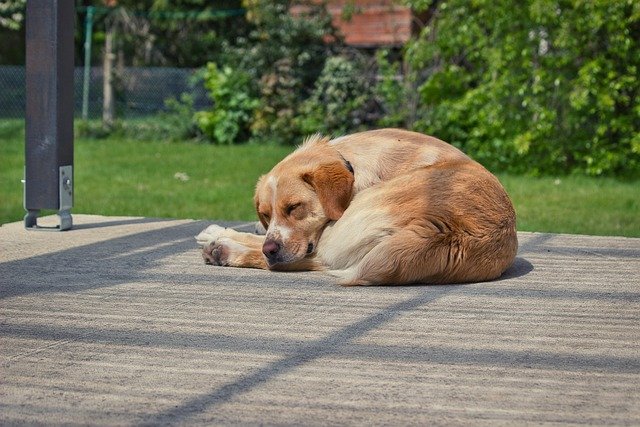
Give your dog a consistent, den-like retreat they can choose to use whenever they feel overwhelmed.
An interior room without windows (a bathroom, closet, or basement area) naturally muffles sound and light, making it a good candidate for a safe space. Set it up with your dog’s bed, a few worn items of your clothing, water, and long-lasting chews or a food puzzle to encourage calm, occupied behavior.
The AKC points out that dogs are den animals by instinct, so many will gravitate toward small, enclosed spaces on their own once they know it’s available. Leave the door open rather than confining your dog. VCA specifically cautions against crating an anxious dog during a storm or fireworks event, since a dog in a full-blown panic can injure itself trying to escape a crate.
The goal is a space your dog chooses, not one they’re locked into.
Desensitization and Counter-Conditioning: The Real Fix, Not Just a Band-Aid
Gradual, reward-based exposure to storm and firework sounds, done correctly, at a low intensity, and paired with something your dog loves, is the treatment method with the strongest track record.
Desensitization means exposing your dog to a very low-volume recording of thunder or fireworks, quiet enough that they don’t react, and slowly increasing the volume over many short sessions as they stay relaxed. Counter-conditioning pairs that sound with something wonderful (high-value treats, a favorite game), so the dog starts building a new, positive association instead of a fearful one.
VCA’s guidance suggests teaching a solid “settle” or relaxation cue first, then layering in the sound work, with sessions ideally run daily and lasting well under an hour. This is not a same-day fix. Real behavior change with this method typically takes several weeks of consistent practice, and it’s best started well before storm season or a holiday like the Fourth of July, not during the event itself, when your dog is already too aroused to learn anything.
Once your dog is desensitized, occasional maintenance sessions at full volume during calm times help keep the progress from fading.
Tools That Can Take the Edge Off Right Now
While you work on the underlying fear long-term, several non-drug tools can reduce your dog’s distress in the moment.
Compression wraps (the kind of snug, swaddling garment popularized by products like the Thundershirt) apply gentle, constant pressure that some dogs find calming, similar to swaddling an infant; results vary by dog, so treat it as one tool among several rather than a guaranteed fix.
White noise machines, a fan, a TV, or classical music can help mask the sharp edges of thunder or firework sounds so they’re less startling. Synthetic dog-appeasing pheromone diffusers and collars are another commonly recommended option, along with calming supplements such as melatonin or L-theanine-based products, though you should run any supplement by your vet first, since “natural” doesn’t automatically mean risk-free for every dog.
Physical hearing protection made for dogs exists as well for dogs with especially intense sound sensitivity. Compression wraps and white noise are worth trying because they’re low-risk and low-cost. Where we’ve seen owners get stuck, though, is leaning on them as a total solution when they work best as a supplement to actual desensitization training; without the training piece, you’re managing the fear indefinitely instead of shrinking it.
When It’s Time to Talk to Your Vet About Medication
For dogs whose fear is severe, medication prescribed and monitored by a veterinarian can make training possible and protect your dog’s welfare in the meantime.
Some dogs are so far into panic during a storm or fireworks show that no amount of treats or white noise reaches them, and forcing training sessions on a dog in that state can actually make the fear worse. This is where your veterinarian comes in. Options a vet may discuss include situational medications given an hour or so before a known trigger event, and in some cases daily medication during a difficult season.
The FDA has approved drugs specifically for canine noise aversion, including a fast-acting oromucosal gel and, more recently, an oral solution approved for both noise aversion and separation anxiety, reflecting how much veterinary understanding of this condition has advanced.
None of these are appropriate to guess at or share from another dog’s prescription: dosing, drug interactions, and underlying health conditions (like heart or liver issues) all matter, which is why this decision belongs to your vet, not a home remedy search.
A quick disclaimer: severe or worsening noise phobia can be a genuine medical and behavioral condition, and a veterinarian or veterinary behaviorist, not a DIY approach, should be consulted before starting any medication.
Track Your Dog’s Storm and Fireworks Reactions
Every dog’s fear pattern looks a little different, and what helps one dog may do nothing for another. Use the log below to track your own dog’s reactions over the next several storms or fireworks events: bring it to your vet appointment if you end up discussing medication or a referral to a veterinary behaviorist. This is your log to fill in; there’s no data here yet.
| Date | Trigger (Storm / Fireworks / Other) | Dog’s Stress Signs (check all that apply: panting, pacing, hiding, drooling, trembling, other) | Intervention Used | Recovery Time |
|---|---|---|---|---|
The Bottom Line
A dog afraid of thunderstorms and fireworks is dealing with a real, well-documented form of anxiety, not stubbornness or drama, and it responds well to a layered approach: a safe space your dog can retreat to on their own terms, supportive tools like compression wraps and white noise, and, most importantly, desensitization and counter-conditioning started well before the next storm season or holiday.
That timing detail is worth underlining: starting the week before fireworks season, in our experience, is usually too late for the training pieces here to fully land. For dogs whose fear is severe, a conversation with your vet about medication can make all of that training actually possible.
If noise fear is one piece of a bigger anxiety picture at your house, it’s worth reading up on separation anxiety in dogs as well, since the two often overlap, and if your dog also gets tense around food, toys, or resting spots, our article on resource guarding in dogs covers a related but distinct behavior worth understanding.
You Might Also Be Wondering
Can a dog just “outgrow” fear of thunderstorms and fireworks?
Generally no, without intervention, noise fears tend to stay the same or get worse over time as dogs build more negative associations with each unpleasant event. Early, proactive desensitization gives you the best odds of preventing that progression.
Is it okay to comfort my dog during a storm, or will that reinforce the fear?
Calm, reassuring attention does not reinforce fear: fear is an emotional response, not a trained behavior, so you can’t “reward” it into existing. The AKC specifically advises against punishing anxious behavior and supports comforting your dog with calm petting and a secure space.
Should I crate my dog during fireworks?
Veterinary guidance generally advises against confining an already anxious dog in a closed crate during a storm or fireworks event, since a panicking dog can injure itself trying to escape. A safe space your dog can enter and leave freely is the safer choice.
How long does desensitization training usually take to work?
It varies by dog, but plan on several weeks of short, consistent sessions rather than a quick fix, and start well outside of storm or fireworks season so your dog isn’t accidentally exposed to full-intensity triggers mid-training.
What’s the difference between anxiety and a true noise phobia?
General anxiety is milder and situational, while a true phobia is an intense, often escalating fear response that can include panic and self-injury. If your dog’s reaction is severe, sudden, or getting worse, ask your vet about a referral to a veterinary behaviorist.
References
- Understanding Thunderstorm Anxiety in Dogs: American Kennel Club
- Treating Fear of Storms and Fireworks in Dogs: VCA Animal Hospitals
- Dogs in Overdrive: American Veterinary Medical Association (JAVMA News)
- FDA Approves First Drug to Treat Noise Aversion and Separation Anxiety in Dogs: U.S. Food and Drug Administration