

Every off-leash dog owner has the same fear: the moment their dog spots a squirrel, another dog, or an open field and just keeps running. A reliable recall, teaching your dog to come back every time, no matter what’s competing for their attention, is less about a single command and more about years of training habits built one short session at a time.
It’s genuinely one of the highest-value things you can teach a dog, because it’s the difference between off-leash freedom and a leash for life.
Here’s how professional trainers actually build a recall that holds up around real distractions, not just in a quiet backyard.
The One Way to Ruin a Recall Forever
Trainers call it a poisoned cue, when a command gets paired often enough with something unpleasant that the dog starts associating the word itself with the bad outcome, at which point no amount of practice fixes it without literally replacing the word.
“Come” is the most commonly poisoned cue in dog training, because owners call their dog over to end a fun park visit, get a bath, or get scolded for something unrelated that happened minutes earlier. Once poisoned, a dog doesn’t ignore “come” out of stubbornness; it has genuinely learned that word predicts something worse than whatever it’s currently doing.
The single most important rule below (always make coming back worth it) exists specifically to prevent this, not just to add positivity for its own sake.
Start With the Right Foundations
Before you ever say “come” with real stakes attached, your dog needs two things in place: name recognition (looking at you reliably when you say their name) and comfort with being physically grabbed by the collar. Both matter more than people expect: a dog that hears their name and doesn’t orient toward you has nothing to build a recall on, and a dog that’s never been calmly grabbed by the collar may dodge your hand at the exact moment you need to clip a leash on.
Build It Close, Then Add Distance
📌 Quick tip: The most common mistake is asking for too much distance or too much distraction too soon. A recall that fails once around a big distraction is much harder to rebuild than one you build patiently.
Start on a standard 6-foot leash, just a few feet away in a low-distraction space. Say your dog’s name and “come” in a happy, inviting tone, and reward heavily, high-value food, not just kibble, the instant they arrive. Repeat often, in short sessions, before ever increasing distance.
Once that’s solid, move to a long line (20–30 feet) in a slightly more distracting space like a quiet park, so your dog has room to get distracted but you still have a physical way to guide them back if they don’t respond.
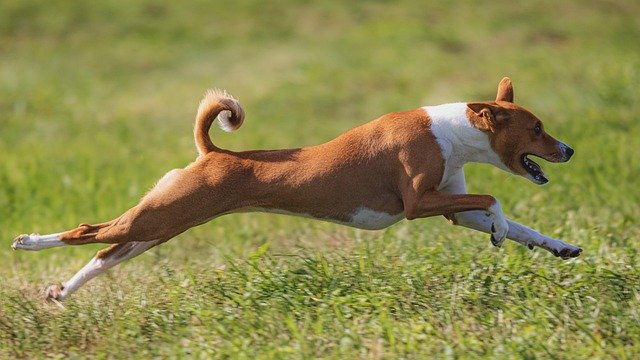
Take the Leash Off, But Not Outdoors Yet
The next big step is practicing recall indoors, off-leash, in a room or hallway with no distractions. This teaches your dog that “come” means the same thing whether or not there’s a leash attached, and lets you raise criteria without worrying about safety.
Once that’s consistently reliable, add a “sit” on arrival; this gives you a controllable moment to clip the leash back on or check your dog over, rather than a recall that ends with your dog immediately spinning off again.
Proof Around Real Distractions, Gradually
This is the step most owners rush. Distractions should be introduced one level at a time, another person walking by at a distance, then closer; a familiar dog nearby, then an unfamiliar one; a low-value toy on the ground, then a higher-value one. Every time you raise the distraction level, drop back to a shorter distance and a leash or long line until your dog proves reliable at that level too.
Only after your dog passes this kind of testing across many different environments and distraction types is off-leash recall actually safe to rely on, not because it feels ready, but because it’s been tested.

Log Recall Latency and Success Rate Before Going Off-Leash
“He mostly comes when called” is exactly the kind of vague confidence that gets a dog lost near traffic. Two numbers replace the guess: how fast your dog turns and comes (latency), and how often (success rate) at each distraction level.
| Setting | Latency (sec) | Success (X/10) | Distance from dog |
|---|---|---|---|
| Backyard, no distraction | |||
| Backyard, mild distraction | |||
| Open outdoor space, long line |
Standard clicker-training guidance is not to raise difficulty (dropping the long line, more distraction) until the current level is at or above 80%. For recall specifically, that threshold matters more than for almost any other command, since a missed recall can mean real danger, not just a training setback.
What to Avoid
Never call your dog to you for something unpleasant, a bath, nail trims, being put away when the fun ends. Instead, go get your dog for those moments, and keep “come” associated exclusively with good things. Similarly, avoid repeating the cue over and over if your dog doesn’t respond the first time; it teaches them that “come” is optional until the third or fourth ask.
If a recall fails, go back to your dog rather than escalating the cue, and lower the difficulty next time instead of pushing through.
Frequently Asked Questions
How long does it take to train a reliable recall?
It varies by dog and consistency of training, but most owners see a genuinely reliable recall, one that holds up around real distractions, after several months of regular, short practice sessions rather than a few weeks.
What if my dog only listens with treats?
That’s a normal stage, not a failure. The goal is to gradually shift to intermittent rewards (praise, play, or a treat some of the time) once the behavior is well established, rather than removing rewards too early.
Can any dog learn a reliable recall?
Most dogs can, though some breeds with strong prey drive or independent temperaments take more patience and a longer distraction-proofing process. A reliable recall is achievable for nearly any dog with consistent, gradual training; it just may take longer for some.
Is a long line necessary, or can I skip straight to off-leash?
A long line is worth the extra step. It lets your dog practice at real distance while you still have a physical way to prevent a failed recall from becoming a bad habit; skipping it usually means more setbacks, not fewer.
The Short Version
Our take: recall training rewards patience more than any other skill in dog training. The owners who get a truly reliable “come” are the ones who resist the urge to test it in a high-stakes situation before it’s actually proven itself around smaller distractions first. Build close, add distance slowly, and treat every level of distraction as its own mini training goal.
Trust the process over the calendar: a recall that’s rushed to off-leash too early tends to fail exactly when it matters most, while one built gradually holds up for the life of the dog.