

A dog who stiffens over a food bowl, freezes when you walk near a chew toy, or growls if someone reaches for their bed isn’t being “dominant” — they’re resource guarding, and it’s one of the most common behavior concerns trainers hear about. Handled early and correctly, it’s very manageable. Handled with punishment, it tends to get worse, not better.
What Resource Guarding Actually Is
Key point: Resource guarding is a dog protecting something they value — food, toys, a bed, even a person — because from their perspective, possession equals ownership.
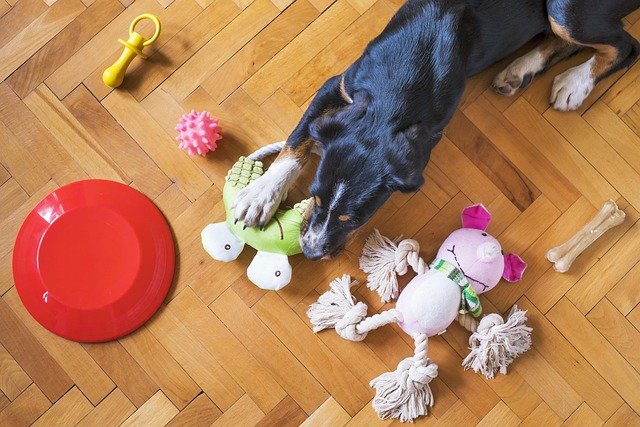
Trainers sometimes call it “possessive aggression,” but that label makes it sound more dramatic than it usually is. At its core, resource guarding is a dog trying to hold onto something they consider valuable when they perceive a threat of it being taken. It can show up around food bowls, bones and chews, toys, resting spots, or even a favorite person if another dog or person approaches. It’s a normal instinct with roots in survival, not a moral failing or a sign your dog is “aggressive” by nature.
Reading the Warning Signs Before It Escalates
Key point: Guarding almost always shows up in body language well before a growl or a bite — catching it early makes the whole process easier.
Dogs typically telegraph guarding behavior in stages, and learning to spot the early ones lets you intervene before things escalate:
- Stiffening — the body goes rigid or freezes over the item.
- “Whale eye” — you can see the whites of their eyes as they track you without turning their head.
- A hard stare — fixed, unblinking eye contact directed at whoever is approaching.
- Lip lifting or bared teeth — a visible warning before any sound.
- Low growling — the most obvious sign, and one that should never be punished (see below).
A dog who growls is communicating, not misbehaving. Punishing a growl doesn’t remove the underlying discomfort — it just teaches the dog that warning you isn’t safe, which can produce a dog who skips straight to biting next time because the growl “didn’t work.”
Why Punishment Makes Resource Guarding Worse
It’s tempting to respond to guarding with a firm correction — yelling, grabbing the item away, or physically dominating the dog to “prove” you’re in charge. Trainers are consistent on this point: it backfires. Punishment confirms the dog’s original fear (that your approach means losing the item), which intensifies guarding rather than resolving it. The more effective route is the opposite: teach the dog that your approach reliably predicts something better, not something taken away.
The Trade-Up Method: Step by Step
Key point: The goal is to make your dog’s brain associate “person approaching my stuff” with “great things happen,” not “I’m about to lose this.”
A widely recommended technique — sometimes called counter-conditioning or the “trade-up” method — gradually rebuilds that association:
- Set up a low-stakes starting point. With a leash or a light tether, give your dog a low-value item worth guarding only mildly.
- Start at a distance. From 6–8 feet away, toss a high-value treat (chicken, hot dog, cheese) toward your dog as you walk past, without making a move toward the item itself.
- Watch the body language. If your dog’s posture stays loose and they look up expecting more good things, you’re on the right track. If they stiffen, you’re too close — add distance.
- Gradually shorten the distance over many short sessions, always tossing the treat and moving on rather than lingering near the guarded item.
- Only progress when relaxed — rushing this step is the most common reason it doesn’t work. Slow, boring, repetitive sessions are what actually change the underlying emotional response.
Done consistently, most dogs start to visibly relax as a person approaches, because the pattern has been retrained: “someone’s coming toward my stuff” now predicts a bonus, not a loss.
Everyday Management While You Work on It
While you’re working through counter-conditioning, a few simple habits reduce risk in the meantime:
- Feed multiple dogs separately if resource guarding involves other pets, at least until the behavior improves.
- Don’t tease or test it — repeatedly taking a bowl away “to check” if your dog reacts just rehearses the guarding behavior and erodes trust.
- Manage around kids specifically — most guarding-related bites involving children happen because a child approached a dog’s food or toy without adult supervision. Treat this as a hard management rule, not just a training goal.
- Pick up high-value chews when guests are over if guarding is still a work in progress, rather than relying on training alone in a higher-risk situation.

When to Call a Professional
See your veterinarian first if guarding appears suddenly in an older dog, since pain or a medical issue can sometimes trigger new possessive behavior. Beyond that, bring in a certified trainer or veterinary behaviorist if your dog has ever bitten (even without breaking skin), if guarding is severe or worsening despite consistent counter-conditioning, or if there are children in the household — the stakes are too high to rely on trial and error alone.
Quick Q&A
Is resource guarding a sign my dog is dominant or aggressive by nature?
No. It’s a normal, survival-rooted instinct that shows up in many otherwise friendly, well-adjusted dogs. It reflects a specific anxiety about losing valued items, not an overall temperament problem.
Should I take things away from my puppy to “get them used to it”?
No — repeatedly taking items away, even from a puppy, teaches them that hands approaching mean loss, which can create or worsen guarding. Trading up (offering something better in exchange) is far more effective than practicing removal.
My dog only guards from other dogs, not people. Does the same approach work?
The same trade-up principle applies, but managing guarding between dogs (separate feeding stations, separate high-value chew time) is usually necessary alongside training, since you can’t always control another dog’s approach the way you can your own.
How long does counter-conditioning for resource guarding usually take?
It varies widely by dog and severity — mild cases can improve in a few weeks of short daily sessions, while more entrenched guarding can take months of consistent work, ideally with a certified trainer guiding the pace.
Final Thoughts
Resource guarding is common, explainable, and — in most cases — very treatable without confrontation. The fastest path forward is recognizing the early warning signs, resisting the urge to punish a growl, and using a slow, consistent trade-up process to teach your dog that your approach means good things, not lost things. If your dog has ever bitten or guarding involves children in the home, loop in a certified trainer or behaviorist rather than handling it solo.
Resource guarding and impulse control often go hand in hand — teaching reliable bite inhibition and calm greetings (see our guide on polite greetings) builds the same foundation of trust this technique relies on.
This article is for general educational purposes and isn’t a substitute for professional behavioral guidance. If your dog has bitten or guarding is severe, consult a certified trainer, veterinary behaviorist, or your veterinarian before attempting training on your own.